
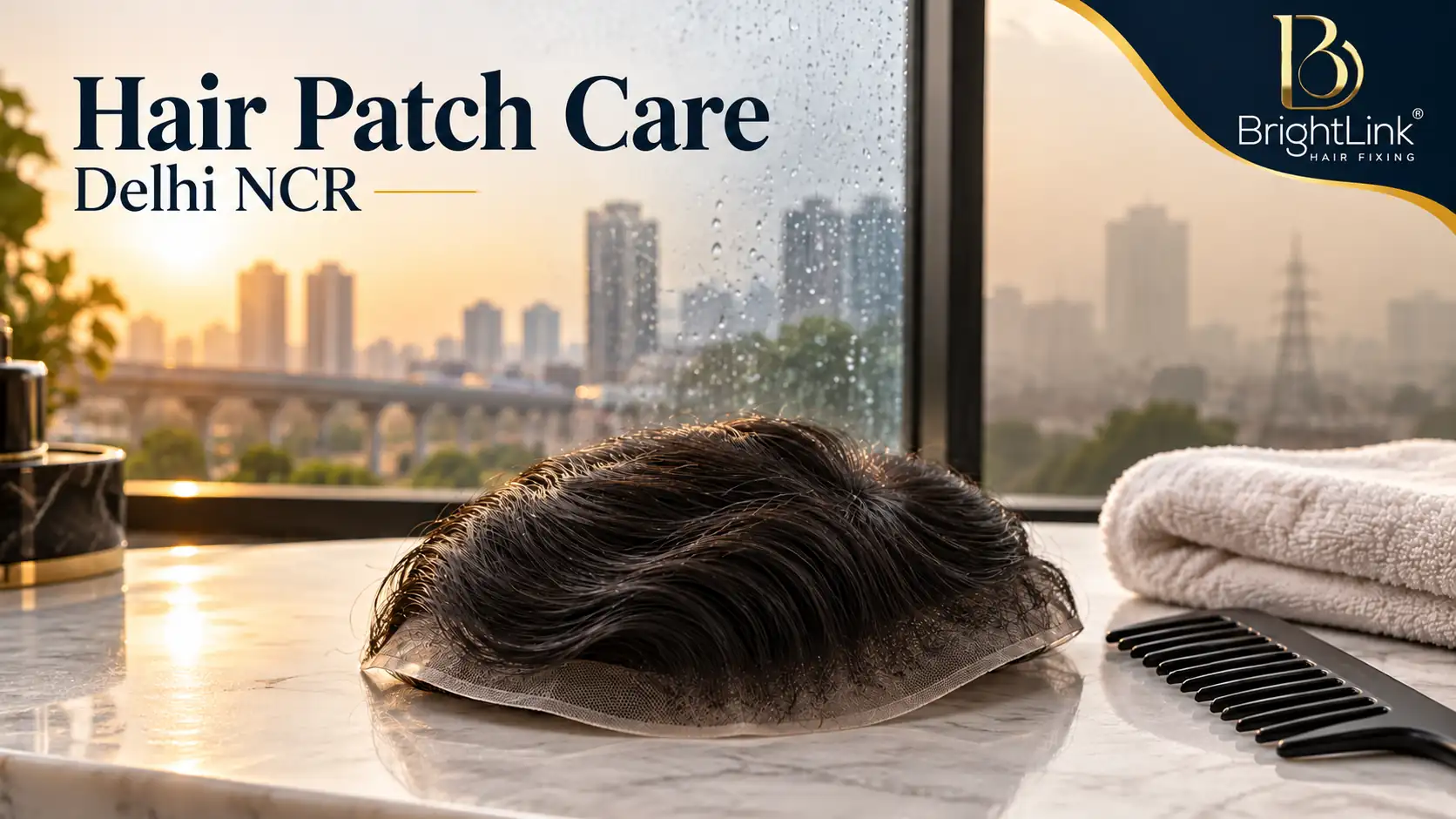
Hair Patch Care in Delhi NCR: Handling Summer Sweat, Monsoon Humidity and Pollution
Anyone who lives in Delhi NCR knows the weather never does things halfway. May and June bring punishing heat, July and August bring humid, sticky monsoon days, and the winter months bring dust and smog on top of dry air. For someone wearing a hair patch, each of these seasons asks something different of the patch, the bonding and the scalp underneath.
The good news is that a well-fitted human-hair patch is built for everyday Indian life. With a few season-specific habits, you can keep it secure, comfortable and natural-looking all year. This guide explains what each season does to a hair patch and what you can do about it.
Why Delhi NCR Weather Is Tough on a Hair Patch
A hair patch sits on your scalp for weeks at a time, so it experiences everything your scalp does: sweat, oil, moisture, dust and temperature swings. In NCR these conditions change sharply through the year, which is why a care routine that works in January may not suit July.
Summer Heat and Sweat
High temperatures make the scalp sweat more, and sweat mixed with natural oil can soften the bonding over time. You may notice itching, a damp feeling under the base, or edges that begin to lift earlier than expected. Breathable bases and regular cleaning go a long way here.
Monsoon Humidity
Humidity makes hair absorb moisture, which can lead to frizz, tangling and a limp, flat look. A damp scalp also takes longer to dry, so the area under the patch needs extra attention after rain or a long, sweaty commute.
Dust and Pollution
Fine dust and pollution particles settle on hair and scalp alike. On a patch, they can build up near the bonding line, leaving the hair dry and the edges dull. Gentle, regular cleaning keeps this buildup from turning into a bigger problem.
Season-by-Season Care at a Glance
|
Season |
Main Challenge |
What to Do |
|---|---|---|
|
Summer (April–June) |
Heavy sweating, itching, loosening edges |
Blot sweat gently, keep the scalp clean and dry, avoid heavy styling products |
|
Monsoon (July–September) |
Humidity, frizz, damp scalp after rain |
Dry the hair and scalp fully, use a soft brush for tangles, avoid sleeping with a damp patch |
|
Winter (November–February) |
Dry hair, static, friction from caps and mufflers |
Use a gentle conditioner as advised, choose soft caps, brush carefully |
|
Dusty and smoggy days |
Particle buildup near edges |
Cover hair on dusty rides, schedule regular cleaning and servicing |
Daily Habits That Protect Your Hair Patch
Small, consistent habits matter more than occasional deep care. Build these into your routine:
-
Blot sweat with a soft, clean cotton cloth instead of rubbing the patch.
-
Keep the scalp and patch edges dry; let hair dry fully before sleeping.
-
Use only the shampoo and conditioner your technician recommends, as harsh products can strip human hair and weaken the bond.
-
Brush gently from the ends upward with a wide-tooth comb or soft brush, and avoid tugging near the edges.
-
Cover your hair on dusty rides with a clean, breathable scarf or cap, and always wear a helmet when riding.
-
Consider a silk or satin pillowcase to reduce friction and tangling overnight.
Mistakes to Avoid in Peak Weather
Most patch problems in extreme weather come from well-meant shortcuts. Watch out for these:
-
Scrubbing the bonding line aggressively when it feels itchy.
-
Applying oils, gels or sprays near the base without checking with your technician.
-
Trying to re-stick lifting edges at home with random adhesives.
-
Skipping or delaying scheduled service because the patch still looks fine.
-
Washing with very hot water, which can dry out the hair.
Our guide on mistakes to avoid after getting a hair patch covers more of these in detail.
Choosing the Right Base for NCR Weather
Base material matters more in hot, humid weather than most people realise. Lace bases are generally lighter and more breathable, which many wearers find comfortable in summer, while skin and mono bases offer different advantages in finish and durability. The right choice depends on your scalp, lifestyle and how much you sweat, so it is best decided during a consultation.
Not sure what to expect from that visit? Read what happens during your first hair patch consultation, then browse our hair patches collection to see the options.
When to Book a Service
Most wearers should plan professional maintenance every 20–30 days, and during the sweatiest months it is wise not to stretch that window. If you notice lifting edges, persistent itching or a patch that feels loose, book earlier instead of waiting. Our guide on how often you should get your hair patch serviced explains the schedule, and common hair patch problems and professional solutions helps you spot trouble early.
If you are planning exercise or travel through the summer, our post on swimming, sweating and exercising after hair fixing clears up the most common myths.
Book Your Free Consultation Today
Whatever the season, your hair patch should look natural and feel comfortable. Visit BrightLink's Noida studio or Faridabad studio for a free, honest consultation, or explore our Delhi NCR hair fixing services. Call Noida on +91 83929 98522 or Faridabad on +91 96256 11966 (Mon–Sat, 10 AM–7 PM), or contact us online.
FREQUENTLY ASKED QUESTIONS
Your Questions, Answered
Yes. A properly fitted patch with a breathable base can be worn comfortably through summer. The key is regular cleaning, gentle sweat management and timely servicing.
Rain on its own will not ruin a patch, but a damp scalp and humidity can cause frizz and make hair harder to manage. Dry the hair and scalp thoroughly afterwards and follow your technician's washing advice.
Sweat and oil build up under the base in hot weather, which can cause itching. Keep the area clean and dry, avoid scratching the bonding line, and visit your technician if the itching persists.
Dust and pollution particles can settle on the hair and near the edges, making it dry and dull over time. Regular gentle cleaning and professional servicing help prevent buildup.
The standard 20–30 day interval works for most people, but in very humid or sweaty periods it is better not to delay. Your technician can advise a schedule based on your scalp and lifestyle.
Related Posts
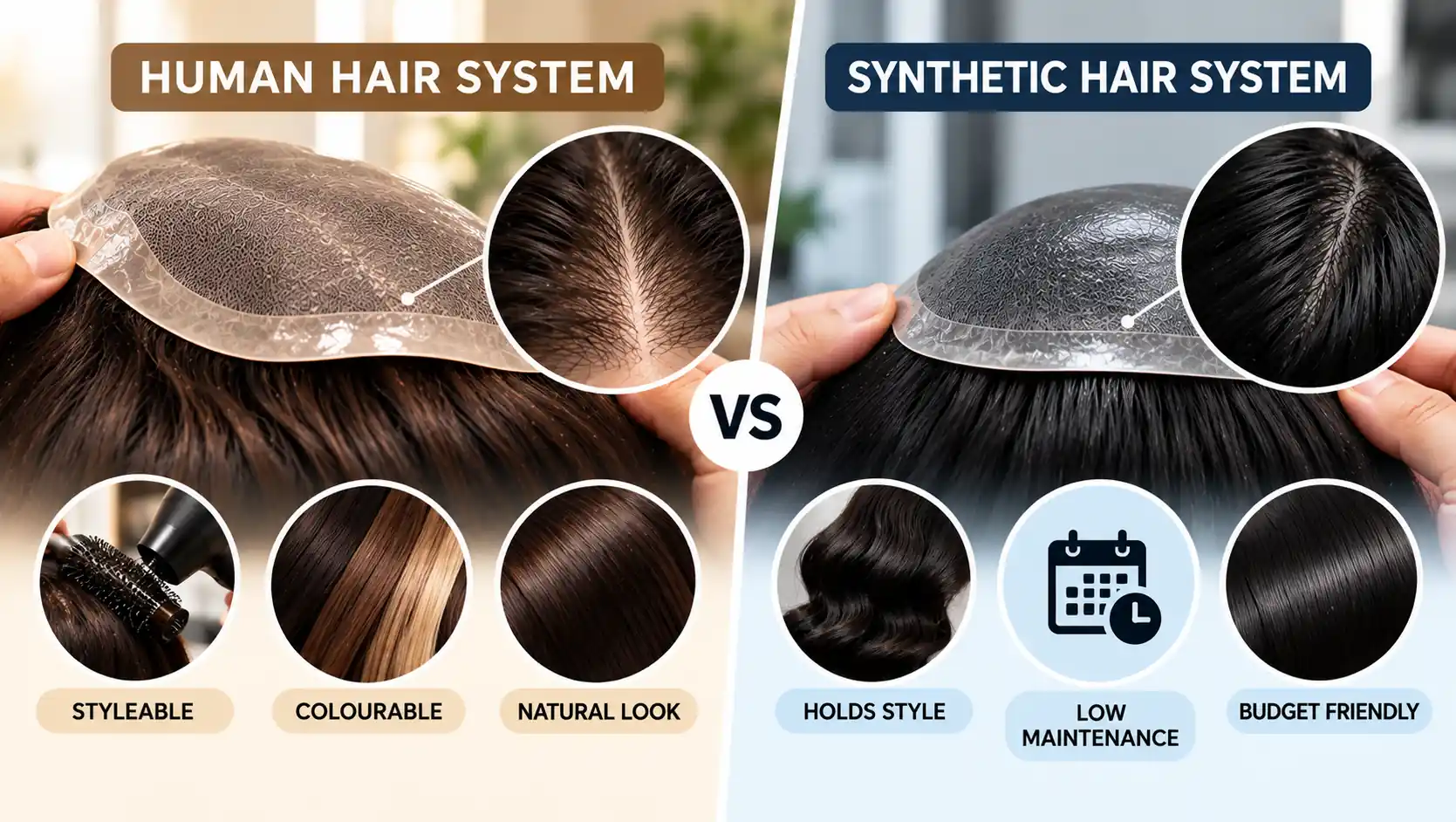
Standing at the counter, choosing between human hair and synthetic hair systems can feel like choosing between two completely different products, because in many ways, it is.

Hair loss conversations tend to centre on men, but thinning hair and alopecia affect women just as significantly, often with even less open discussion around solutions.
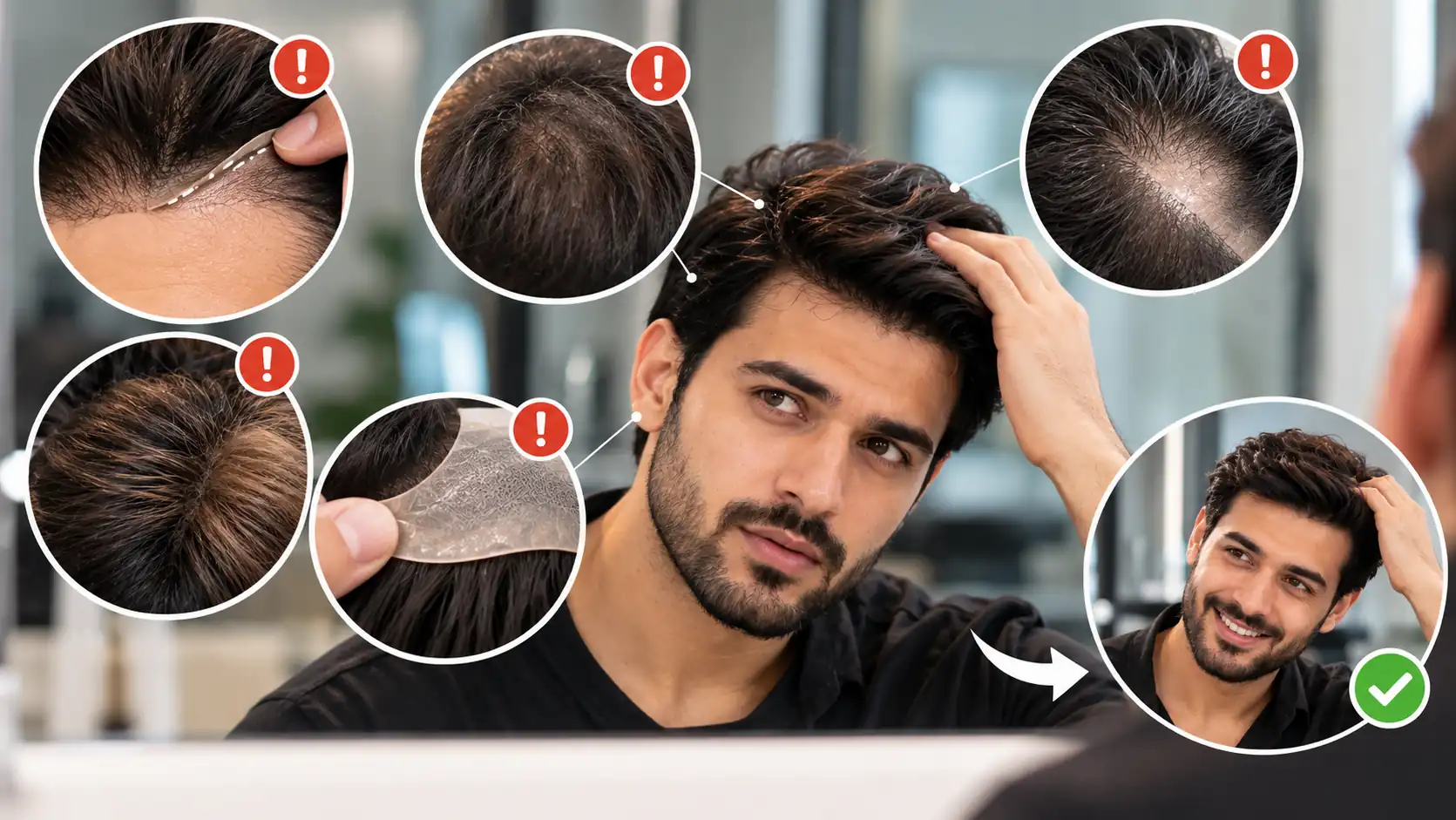
Your hair patch has been serving you well for months. But somewhere along the way, "well" quietly became "just about okay," and that's usually the first sign something needs attention.