
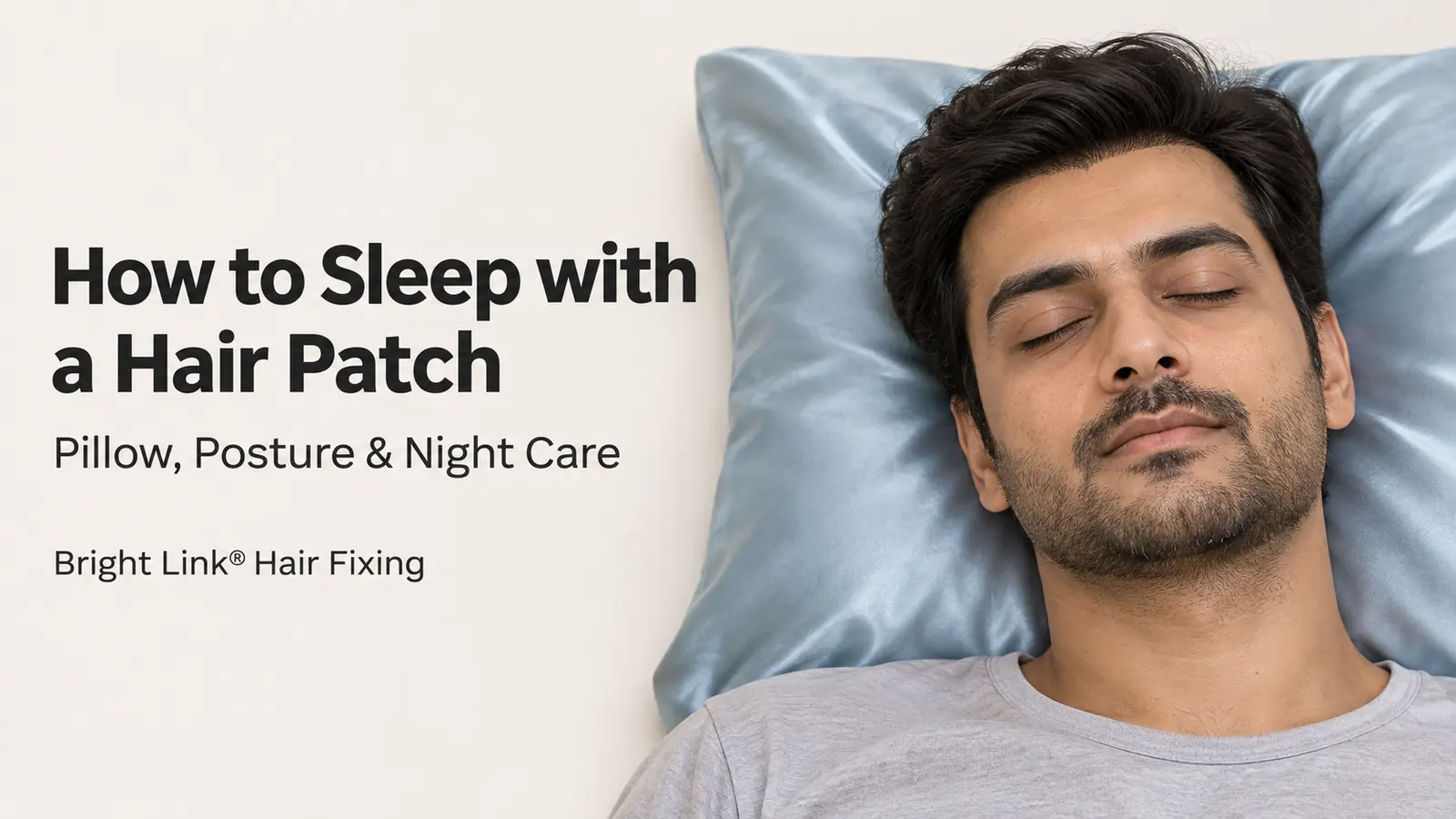
How to Sleep with a Hair Patch: Pillow, Posture and Night Care Tips
One of the first worries after getting a hair patch is simple: what happens when I go to sleep? The good news is that a properly fixed patch is made for daily life, and that includes the night. A few small habits will keep it secure, tangle-free and natural-looking in the morning. This guide covers the pillow, the position and the routine that make the biggest difference.
Can You Sleep With a Hair Patch On?
Yes. A well-fixed hair patch is designed to stay in place through normal sleep. You do not need to remove it every night if it has been bonded by a trained specialist. What matters is how you prepare your hair before bed and how you handle the patch in the morning.
If you are new to wearing a patch, our guide to the first 30 days with a hair patch shows what to expect while you adjust.
5 Tips for Sleeping Comfortably With a Hair Patch
1. Choose a Smooth Pillowcase
Rough cotton can rub against the hair and edges all night, causing frizz and tangling. A satin or silk pillowcase lets the hair glide, which reduces friction and keeps the hairline neat.
2. Pick the Right Sleeping Position
Sleeping on your back puts the least pressure on the patch. Side sleeping is fine for most people. If you sleep on your stomach and press your head into the pillow, check the edges more often for lifting.
3. Keep the Hair Dry and Detangled
Go to bed with dry hair. Damp hair and a damp patch can weaken the bond and cause matting. Brush gently from the ends upward before you lie down.
4. Tie or Cover the Hair if Needed
For longer styles, a loose, soft hair cover or a very gentle tie prevents knots. Avoid tight bands or clips that pull on the bonded edges.
5. Avoid Heavy Products at Night
Oils, gels and thick serums can seep under the edges and loosen the bond. Keep nighttime products minimal and ask your specialist what is safe for your base.
Sleep Setup at a Glance
|
Habit |
Better Choice |
Avoid |
|
Pillowcase |
Satin or silk |
Rough cotton |
|
Position |
On your back or side |
Pressing the face into the pillow |
|
Hair state |
Dry and brushed |
Wet or tangled |
|
Products |
Light or none |
Heavy oils and gels |
|
Hair ties |
Soft, loose cover |
Tight bands and clips |
Your Simple Night Routine
1. Brush the hair gently from the ends upward.
2. Check that the edges are flat and secure.
3. Make sure the hair and scalp are completely dry.
4. Use a soft cover for long hair if you need one.
5. Lie down on a smooth pillowcase.
The whole routine takes about two minutes and soon becomes automatic.
Morning Care After Sleeping
The morning is when most wearers notice small problems. Spend a minute checking your patch:
• Detangle gently with a soft brush, starting at the ends
• Press down any edge that looks slightly raised
• Fix your parting and style as usual
• Note any spot that keeps lifting and mention it at your next service
Persistent lifting is a sign that the patch needs attention. Our post on common hair patch problems and solutions explains the usual causes.
Common Night-Time Mistakes
• Going to bed with wet hair
• Using a rough or old pillowcase
• Sleeping with a tight hair tie
• Scratching the edges in your sleep or at night
• Skipping the morning check
Most of these are also covered in mistakes to avoid after getting a hair patch.
When Sleep Problems Mean a Service Is Due
If the patch feels loose at night, itches, or looks matted every morning, it may be due for professional cleaning or re-bonding. Most wearers need a service every 20 to 30 days. Keeping to this schedule makes nights much easier.
Need Help With Your Night Routine?
Our team will show you the best care routine for your base and lifestyle.
• Noida: +91 83929 98522
• Faridabad: +91 96256 11966
• Timings: Monday to Sunday, 9 AM to 7 PM
FREQUENTLY ASKED QUESTIONS
Your Questions, Answered
No, not if it is a bonded patch fixed by a specialist. Removal at home can damage the base and the bond, so leave it in place.
Normal sleep will not damage it. Friction, tight hair ties and sleeping with wet hair are what cause problems.
Yes, but heavy sweating can loosen the bond. Keep the room cool and read our tips on sweating and exercise with a hair patch.
Check whether the scalp is clean and dry. If the itch continues, speak to your specialist, because it may point to buildup or a fit issue.
Related Posts

Hair patch prices in Faridabad vary because no two patches are the same. See the six factors that decide the cost, how to compare quotes fairly and what to ask before you pay.

Choosing a hair patch centre in Faridabad takes more than comparing prices. Learn the seven checks, key questions and warning signs that help you pick a specialist who delivers a natural look and long-term support.

Hair patch aur full wig saamne se ek jaise dikh sakte hain, lekin dono ki coverage aur fitting alag hoti hai. Samjhiye ki aapke hair loss pattern ke liye kaunsa option sahi ho sakta hai.