
Hair Patch for Crown Thinning vs Full Baldness: Which Coverage Type Do You Need?
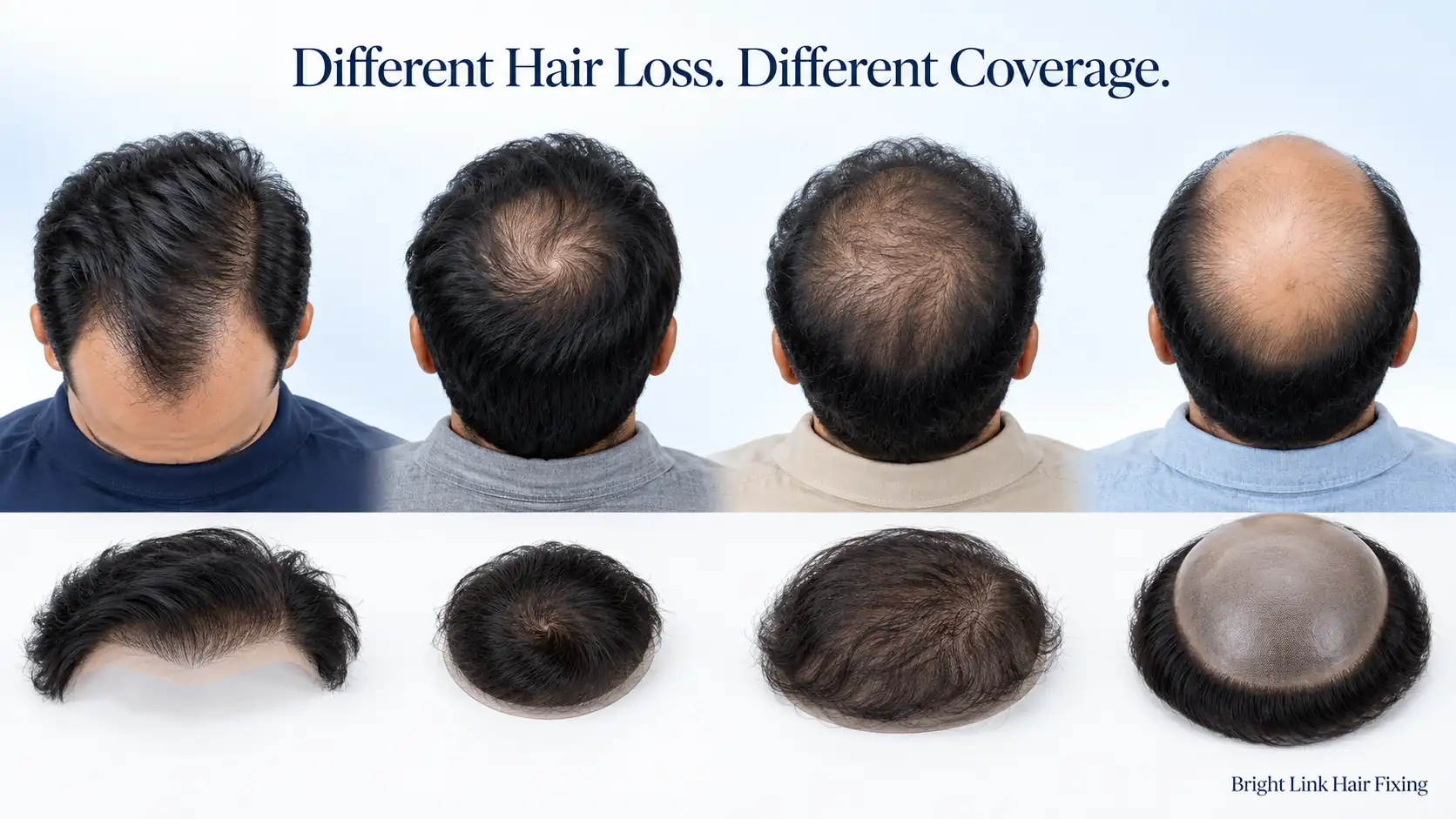
Two people can both say they are losing hair and need completely different solutions. One may have a thinning crown with healthy hair elsewhere. Another may have lost most of the hair on top of the head. A hair patch that suits one will not necessarily suit the other.
This guide explains the common hair loss patterns, which kind of coverage usually fits each, and how a consultation helps you decide.
Understanding Your Hair Loss Pattern
Before choosing a patch, it helps to know what kind of hair loss you have.
Receding Hairline
Here the hairline moves back at the temples or the front. A patch for this pattern needs a carefully designed front edge that looks natural and blends with the hair that remains.
Crown or Vertex Thinning
Hair thins or disappears at the back of the top of the head. A smaller, targeted patch can cover this area and blend with your own hair around it.
Diffuse Thinning
Hair becomes finer and sparser over a wider area. The right option depends on how much natural hair remains and how it will blend with the added hair.
Full or Advanced Baldness
Here most of the hair on top is gone. Full coverage is usually the best option, and our guide to a hair patch for bald men explains it in more detail.
Which Coverage Fits Which Pattern?
|
Hair Loss Pattern |
Typical Coverage Approach |
Key Consideration |
|---|---|---|
|
Receding hairline |
Front and top coverage with a natural hairline |
Hairline design matters most for a natural look |
|
Crown thinning |
Smaller, targeted coverage over the crown |
Must blend with surrounding natural hair |
|
Diffuse thinning |
Partial or larger coverage depending on remaining hair |
Density matching is important |
|
Full baldness |
Full-scalp coverage |
Most freedom to choose hair length, colour and style |
These are general guidelines. A technician will assess your actual scalp and hair loss to recommend what fits.
How Coverage Affects Look and Maintenance
The size of your patch affects more than appearance.
-
Natural blending: Partial coverage relies on your natural hair to blend, so colour, texture and density matching is critical.
-
Styling freedom: Fuller coverage gives you more control over the length and style.
-
Maintenance routine: Larger patches may have different care needs and bonding areas.
-
Comfort: Weight and breathability depend on the base, size and hair density.
To understand how long different patches last and what care they need, read how long does a hair patch last.
Hairline Design and Blending
A convincing result depends heavily on the details at the edge:
-
A soft, irregular front hairline instead of a perfectly straight one.
-
Gradual density at the front, with fuller hair further back.
-
Careful blending of the side and back edges with your natural hair.
-
Colour and texture matched to your own hair, including natural variation.
Our article on why professional hair fixing gives better results explains how expert design makes the difference.
Base Types: Lace, Skin and Mono
The base is the foundation that holds the hair, and the right choice depends on your scalp, your lifestyle and your coverage needs.
-
Lace bases are generally lightweight and breathable, and many people like their natural look at the hairline.
-
Skin bases are designed to give a seamless finish against the scalp.
-
Mono bases combine a fine mesh with other materials and are often chosen for durability and comfort.
Base choice interacts with attachment method too. Read clip-in vs bonded vs tape-in hair systems to learn more.
How a Consultation Decides Your Coverage
A good consultation follows a clear process:
-
Scalp and hair assessment to understand your pattern and the condition of your scalp.
-
Discussion of goals and lifestyle such as sports, work and your daily routine.
-
Recommendation of coverage, base and hair type that suits your pattern and budget.
-
Colour, density and style matching to blend the patch with your own hair.
-
Explanation of maintenance, including servicing schedule and care.
For a step-by-step overview, see what happens during your first hair patch consultation.
Mistakes to Avoid When Choosing Coverage
-
Choosing coverage by price alone without a proper assessment.
-
Selecting a patch that is too small, leaving visible gaps at the edges.
-
Matching the colour to a photo instead of your actual hair in daylight.
-
Ignoring how your hair loss may progress over time.
-
Skipping a trial or fitting before finalising the look.
Book Your Free Consultation Today
The right coverage starts with understanding your own hair loss. Book a free, honest consultation at BrightLink's Noida studio or Faridabad studio, and explore our hair patches and hair wigs. Call +91 83929 98522 (Noida) or +91 96256 11966 (Faridabad), or get in touch online.
FREQUENTLY ASKED QUESTIONS
Your Questions, Answered
A smaller, targeted patch over the crown that blends with your surrounding hair is commonly used. A technician will confirm what suits your pattern.
Not always. Many people with a receding hairline use coverage focused on the front and top. It depends on how much natural hair you have and how it is spread.
Yes. If your pattern changes, your patch may need adjusting or replacing, which is why regular consultations and servicing matter.
Not necessarily. How natural it looks depends on the quality of the design, hairline, density and blending, not just the size.
Both can work, depending on your lifestyle and preferences. Read hair patch vs hair wig: which looks more natural for a full comparison.
Related Posts
Wearing a helmet is non-negotiable, and a hair patch does not change that. Here is how to ride safely, protect your bonding and keep your hair looking natural after every commute.
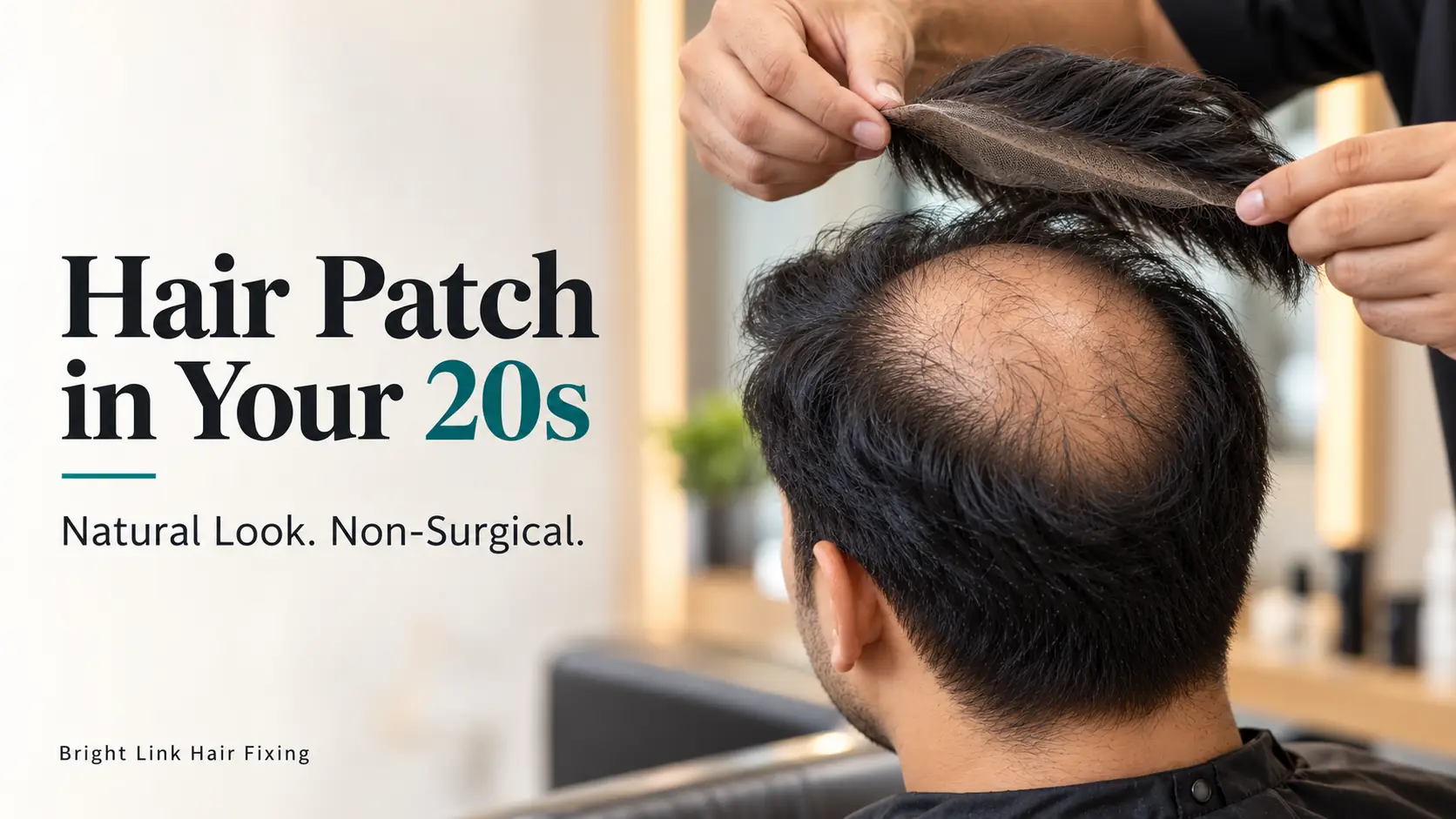
: Hair loss in your twenties can hit confidence hard. This guide explains why it happens, how a hair patch can help young men look natural right away, and how it compares with other options.
Short Excerpt: Your wedding photos and videos will be around for decades. This guide walks grooms through when to book hair fixing, how to prepare for every function, and how to look and feel your best on the big day.