
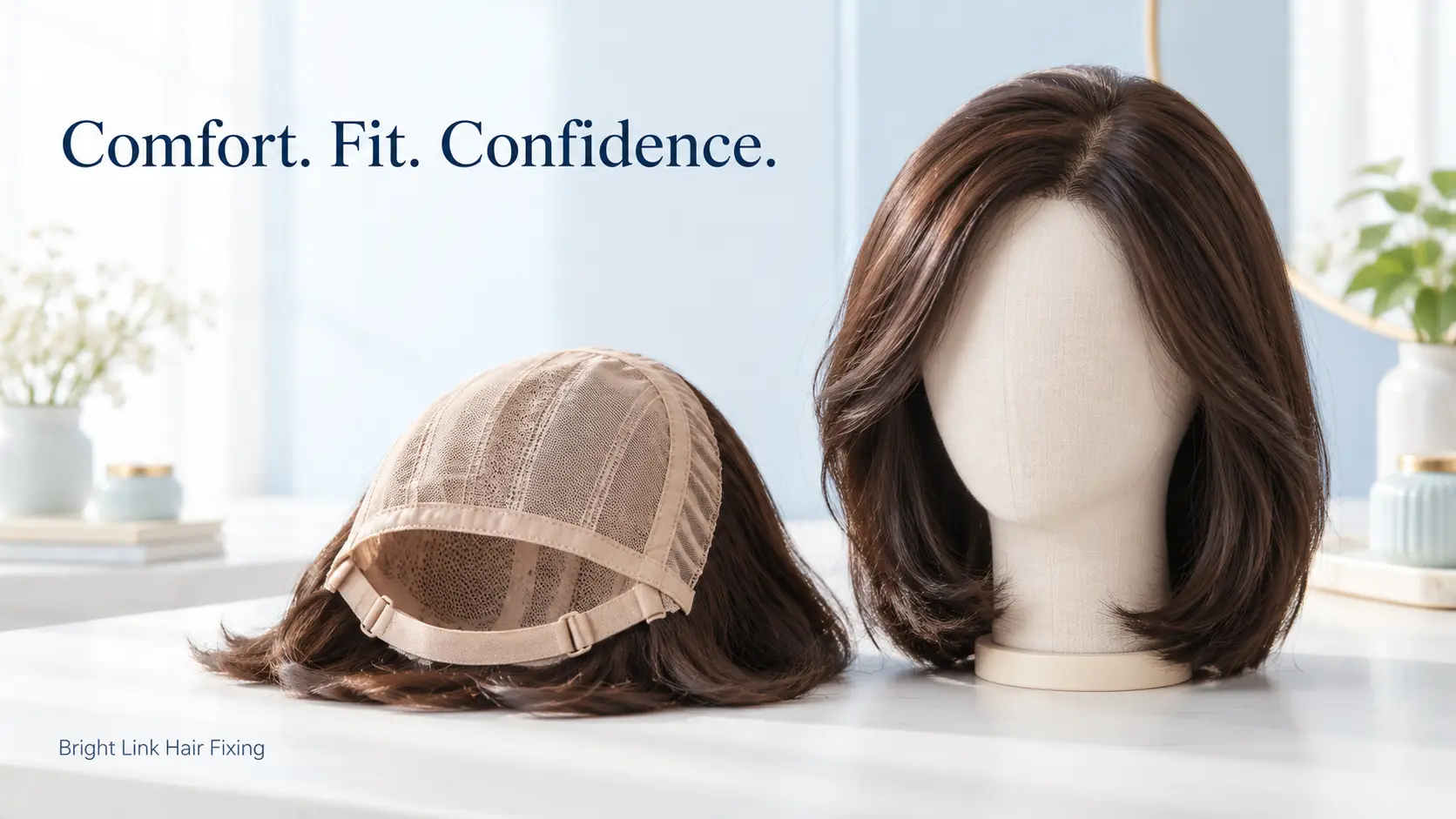
Medical Hair Wigs for Chemotherapy and Alopecia Areata: Comfort, Fit and a Natural Look
Losing your hair because of medical treatment or a condition like alopecia areata is not just a cosmetic change. It can feel like losing a part of how you recognise yourself. For many people, a well-chosen wig becomes a way to feel normal again, to step out of the house comfortably and to keep their privacy.
This guide is written to be practical and kind. It explains how to think about a medical wig, what to look for in comfort and fit, and how to care for it. It is not a substitute for medical advice, so always follow your doctor's guidance about your scalp and treatment.
Why a Medical Wig Is Different
A wig chosen for hair loss caused by medical treatment has different priorities from a fashion wig. Comfort, scalp sensitivity and an authentic look matter most.
Hair Loss During Chemotherapy
Some chemotherapy treatments cause hair to thin or fall out, often over a short period. The scalp can become tender or sensitive at the same time. Many people find it easier to choose a wig before their hair loss is advanced, because it allows the colour, texture and style to be matched to their own hair.
Alopecia Areata
Alopecia areata is a condition that can cause patchy or widespread hair loss, and it can be unpredictable. Some people lose hair in small patches, while others experience more extensive loss. A dermatologist can explain your specific situation and guide you on scalp care.
When Should You Start Looking for a Wig?
There is no single right time, but a few points help:
-
If you know hair loss is likely, consider a consultation before it begins so your wig can match your natural colour and style.
-
If hair loss has already started, you can still get a good match with a consultation and a fitting.
-
Take your time. You can visit with a trusted friend or family member for support.
-
Ask your doctor whether there is anything your scalp needs in the meantime.
How to Choose the Right Medical Wig
A Soft, Breathable Base
A sensitive scalp needs a lightweight, soft and breathable cap. A rough or heavy base can irritate and feel uncomfortable over long hours. Ask to feel the inside of the cap and try the fit before you decide.
Human Hair or Synthetic Hair
Human hair wigs generally look and move more naturally and can be styled with care. Synthetic wigs can be easier to maintain but may feel and behave differently. Read our comparison of real human hair vs synthetic hair systems to weigh the trade-offs.
Secure but Gentle Fit
The wig should sit securely without squeezing your head or pulling on the scalp. Adjustable features can help you fine-tune comfort throughout the day.
Colour, Length and Style Match
Matching your own colour, length and texture helps the wig feel like you. Some people prefer a close match to their previous hair, while others take the opportunity to try a new look.
What to Consider at a Glance
|
What to Consider |
Why It Matters |
What to Look For |
|---|---|---|
|
Scalp sensitivity |
Treatment can make the scalp tender |
Soft, breathable cap; check with your doctor about what is suitable |
|
Hair type |
Affects look, feel and care |
Natural-looking hair matched to your colour and texture |
|
Fit and security |
Comfort for long wear |
Snug but gentle fit with adjustability |
|
Weight and breathability |
Long hours of wear |
Lightweight construction that allows airflow |
|
Style and colour |
Helps you feel like yourself |
A close match or a style you are excited to try |
|
Care needs |
Affects daily effort |
Simple routine you can manage comfortably |
Wig or Hair Patch: Which Suits a Sensitive Scalp?
For extensive hair loss, a wig is often the more suitable option, since it covers the whole head and typically does not depend on strong adhesives on the scalp. A patch usually involves bonding, and a scalp that is tender or reacting to treatment may not be suitable for that. Speak to your doctor and your wig technician before deciding. Our guide to hair patch vs hair wig explains the differences, and you can browse our hair wigs collection.
Caring for Your Wig
A little care keeps a wig looking natural and feeling comfortable.
-
Brush gently from the ends upward with a wide-tooth comb or wig brush.
-
Wash only when needed, using products recommended by your wig technician.
-
Let the wig dry fully on a stand before wearing or storing.
-
Avoid direct heat from stoves, ovens and hot styling tools unless the hair allows it.
-
Store it away from dust, sunlight and moisture.
-
Remove it gently, especially if your scalp is sensitive.
If you want styling guidance, see can you style, colour and cut a hair patch like natural hair, as many of the same principles apply to human hair wigs.
Looking After Yourself Through the Process
Choosing a wig is also an emotional step. A few thoughts that many people find helpful:
-
There is no right way to feel. Some days you may feel confident, and others you may not, and both are normal.
-
Privacy is yours. You decide who to tell and when.
-
Support helps. Friends, family and support groups can make the experience easier.
-
Ask for what you need. A good technician will listen and let you set the pace.
Book Your Free Consultation Today
You do not have to go through this alone or in a hurry. Visit BrightLink's Noida studio or Faridabad studio for a private, no-pressure conversation about your options, or explore our hair wigs. Call +91 83929 98522 (Noida) or +91 96256 11966 (Faridabad), or contact us online. Our guide on hair fixing for women may also help.
FREQUENTLY ASKED QUESTIONS
Your Questions, Answered
Many people find it helpful to do so, since the wig can be matched to their current colour and texture. You can also get a wig after hair loss begins.
Often a wig is considered because it does not usually rely on strong adhesives on the scalp. Your doctor and technician can advise what suits your situation.
Look for a soft, lightweight, breathable cap, a comfortable fit and, ideally, advice from your doctor about what is appropriate for your scalp.
Many people do. Take breaks if your scalp feels uncomfortable, and follow your doctor's guidance if irritation occurs.
It depends on the hair quality, how often you wear it and how you care for it. Gentle handling and regular care help it last longer.
Related Posts
Short Excerpt: Your wedding photos and videos will be around for decades. This guide walks grooms through when to book hair fixing, how to prepare for every function, and how to look and feel your best on the big day.
Delhi NCR's scorching summers, sticky monsoons and dusty air can all affect how your hair patch feels and lasts. Here is a season-by-season guide to keeping it secure, clean and natural-looking all year.
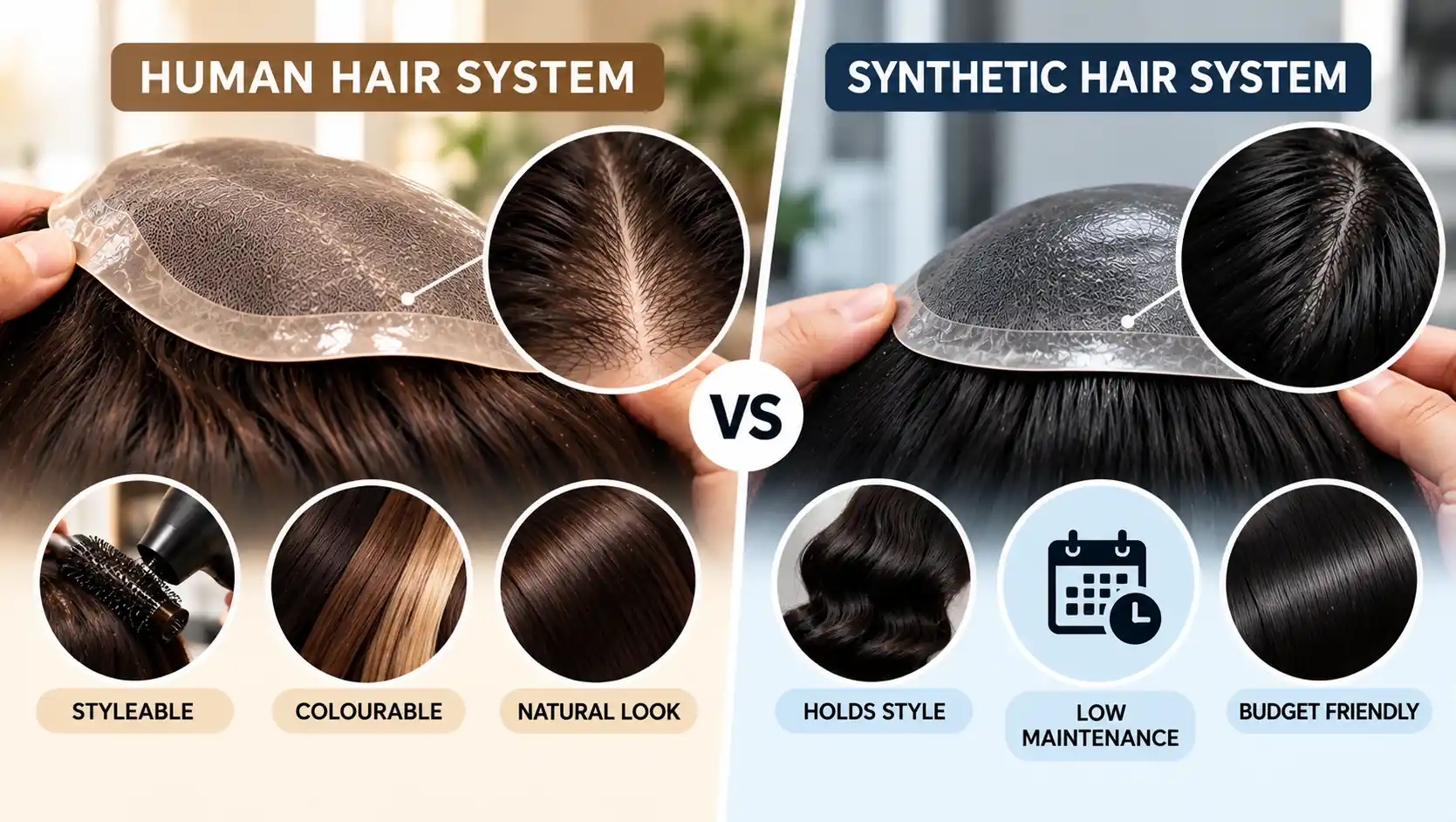
Standing at the counter, choosing between human hair and synthetic hair systems can feel like choosing between two completely different products, because in many ways, it is.