
Hair Patch for Young Men in Their 20s: Options for Early Balding and Receding Hairlines
Noticing a receding hairline or thinning crown at 22 or 25 can be unsettling. Most people expect hair loss to arrive much later in life, so when it shows up early, it can affect confidence at college, at work and on dates. If you are in this situation, you are far from alone, and you have more choices than you might think.
This guide explains why hair loss can begin early, how a hair patch works for young men, and what to consider before deciding.
Why Hair Loss Can Start in Your 20s
There is rarely a single cause. Understanding the likely reasons helps you choose the right next step.
Genetics and Family Pattern
Pattern baldness often runs in families and can begin in the late teens or twenties. If your father or other relatives lost hair early, you may notice the same pattern.
Stress, Diet and Lifestyle
Long study hours, irregular sleep, crash diets and high stress can all affect the hair. These factors may not be the only cause, but they can make thinning more noticeable.
Medical Causes
Sometimes thinning is linked to nutrition, hormones or a medical condition. If your hair loss is sudden or patchy, it is sensible to consult a dermatologist first. A professional can tell you what is behind it and whether treatment could help.
Is a Hair Patch Right for You in Your 20s?
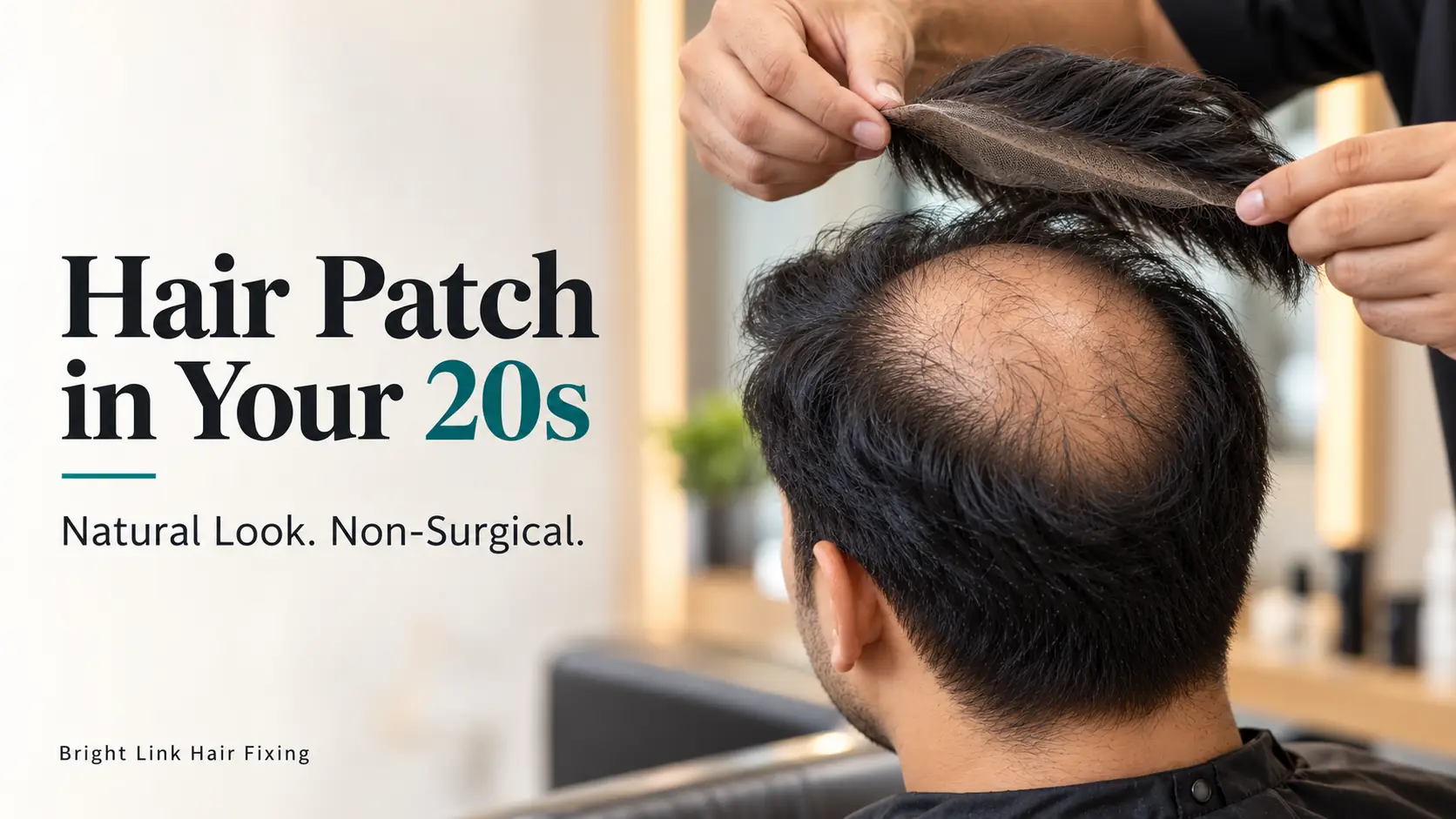
A hair patch is a custom hair system that is fixed over the thinning or bald area, giving instant coverage without surgery. For many young men it is attractive because it works immediately and keeps options open while their hair loss pattern settles.
People in their twenties often choose a patch because:
-
It gives immediate results, so there is no waiting months to see a change.
-
There is no surgery or recovery, which suits students and busy professionals.
-
The look is adjustable, so you can update the style as your preferences change.
-
It keeps future choices open, since you are not committing to a permanent procedure.
If you want to see what is possible, our hair patch before and after stories show real transformations.

Comparing Your Options
There is no single right answer, and many people explore more than one route. Here is a simple comparison.
|
Option |
How It Works |
Things to Consider |
|---|---|---|
|
Medical consultation and treatment |
A dermatologist identifies the cause and may suggest treatment |
Results and suitability vary from person to person; needs a professional opinion |
|
Hair transplant |
Hair is surgically moved from one area to another |
A surgical procedure; doctors often prefer the hair loss pattern to be stable first |
|
Hair patch |
A custom system is fixed over the thinning or bald area |
Instant coverage; needs regular maintenance and servicing |
|
Short crop or shaved look |
Hair is cut very short or shaved |
Simple and low maintenance, but not everyone wants this look |
You can read a detailed comparison in our guide to non-surgical hair replacement vs hair transplant.
What a Natural Result Looks Like for a Young Wearer
Younger faces need a different approach from older ones. A hairline that is too low, too dense or too perfect can look obvious. Instead, a good design usually includes:
-
An age-appropriate hairline with a soft, slightly irregular edge rather than a sharp straight line.
-
Density that matches your natural hair, so the patch blends instead of standing out.
-
Colour and texture matched to your own hair, including your natural shade and wave.
-
A cut that suits your face, ideally styled by a technician who knows how to blend the patch.
To understand how your patch can be shaped and coloured, read can you style, colour and cut a hair patch like natural hair.
Fitting a Patch into a Young Lifestyle
Most young men worry about whether a patch works with an active life. The answer is usually yes, with the right care.
-
Gym and sports: Sweating is manageable with gentle blotting, cleaning and timely servicing. Our post on swimming, sweating and exercising after hair fixing busts common myths.
-
College and office: A well-fitted patch looks like your own hair in everyday settings.
-
Social life and dating: Whether and when to tell people is entirely your choice, and we cover it in a separate guide.
-
Travel and trips: Plan servicing before long trips and ask your technician how to manage the patch when travelling.
Cost and Maintenance: Planning Ahead
A hair patch is not a one-time purchase. It needs regular professional servicing, usually every 20–30 days, and a replacement after some months depending on use and care. Budgeting for this upfront helps you avoid surprises. Our guides on how long a hair patch lasts and hair fixing for men: cost, process and your first visit explain this in detail.
It is also wise to start with a consultation rather than a purchase. A good technician will assess your scalp, hair loss stage and lifestyle, and recommend what suits you, not what is easiest to sell.
Book Your Free Consultation Today
You do not have to wait for your hair loss to "settle" to feel confident again. Book a free, no-pressure consultation at BrightLink's Noida studio or Faridabad studio and explore our hair patches collection. Call +91 83929 98522 (Noida) or +91 96256 11966 (Faridabad), or contact us online.
FREQUENTLY ASKED QUESTIONS
Your Questions, Answered
It is more common than many people realise. Genetics, stress, nutrition and medical factors can all contribute. If hair loss is sudden or patchy, see a dermatologist.
Yes, if the hairline, density and colour are designed for your age and features. A skilled technician avoids over-perfect hairlines that look artificial.
“A hair patch covers hair loss; it does not treat the cause. If you want to explore treatments, speak to a dermatologist as well.
Yes. With the right care, most people continue regular exercise. Follow your technician's advice on cleaning, drying and servicing.
Many doctors suggest waiting until the hair loss pattern is clearer before any surgical decision. A hair patch can bridge that period without surgery.
Related Posts

Short Excerpt: Your wedding photos and videos will be around for decades. This guide walks grooms through when to book hair fixing, how to prepare for every function, and how to look and feel your best on the big day.

Delhi NCR's scorching summers, sticky monsoons and dusty air can all affect how your hair patch feels and lasts. Here is a season-by-season guide to keeping it secure, clean and natural-looking all year.
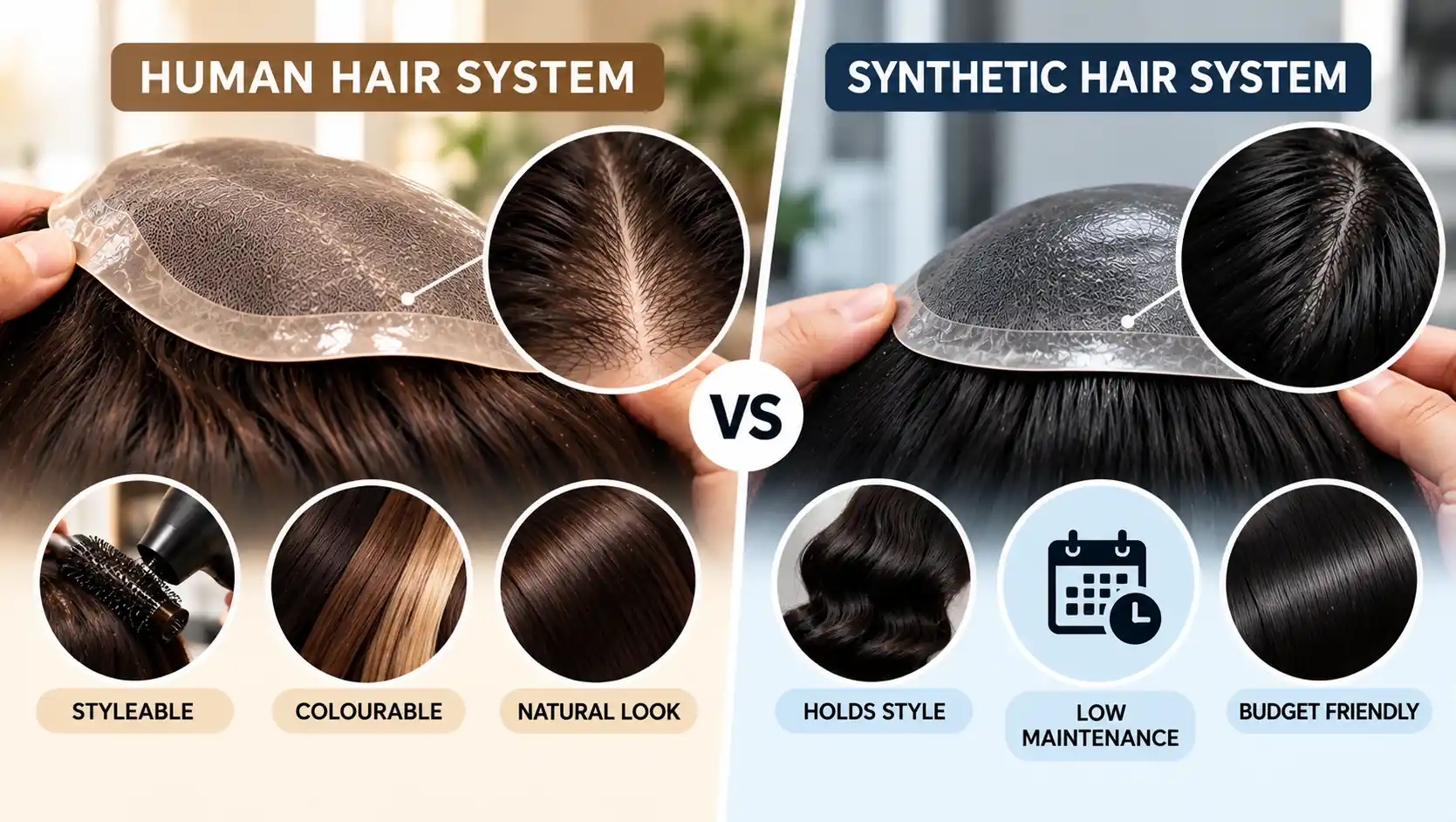
Standing at the counter, choosing between human hair and synthetic hair systems can feel like choosing between two completely different products, because in many ways, it is.